Precision Alert Monitoring
How Smart Defaults Reduced Alert Noise by 20%
Role
Product Design Lead
/
Company
Dataminr
/
Industry
Real-time Security Intelligence
/
Duration
3 Months
/
Year
2022
Precision Alert Monitoring
How Smart Defaults Reduced Alert Noise by 20%
Role
Product Design Lead
/
Company
Dataminr
/
Industry
Real-time Security Intelligence
/
Duration
3 Months
/
Year
2022
Overview
(00)
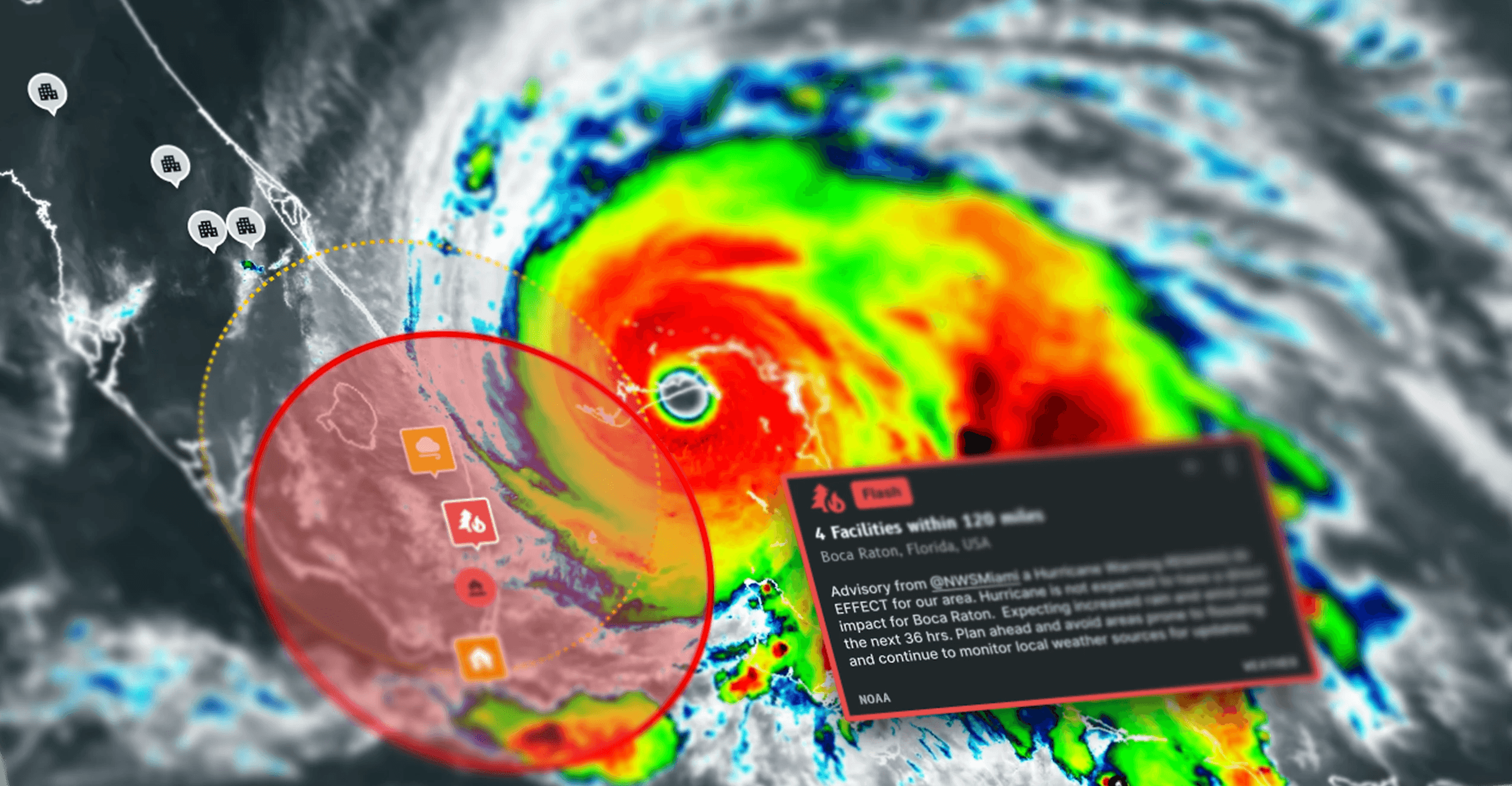
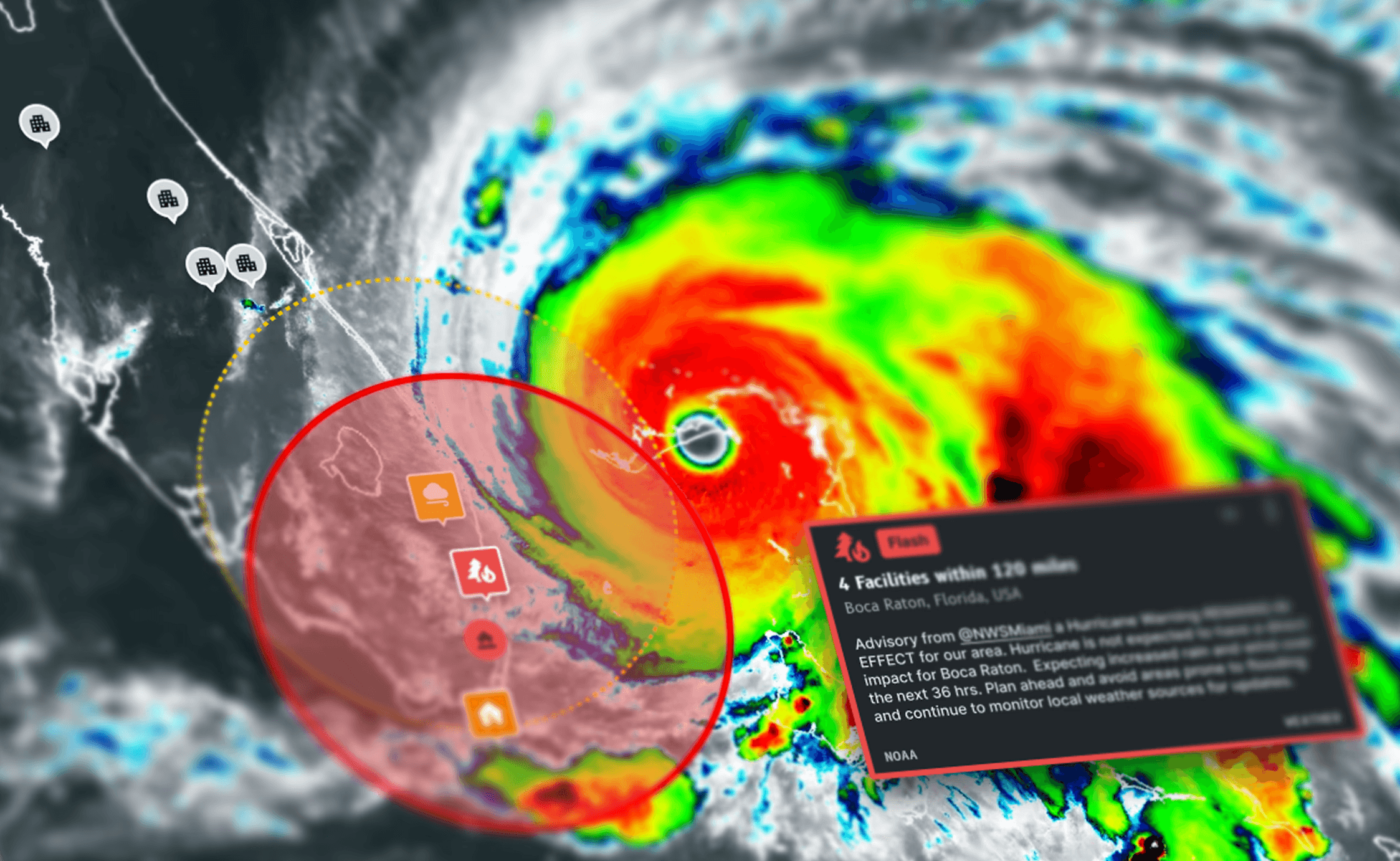
Security analysts use Dataminr to monitor for emerging risks. When a threat arises, security teams need to act fast.
A critical missed alert endangered lives and threatened key customer relationships. Rigid radius settings forced all alert types to use the same geographic coverage—creating noise and missed threats.
My research defined the problem: customers assess risk by proximity to assets, not radius circles. This insight shaped product direction during a post-acquisition debate.
I designed a solution that delivers critical information when security teams need it most.
Understanding the Problem
(01)
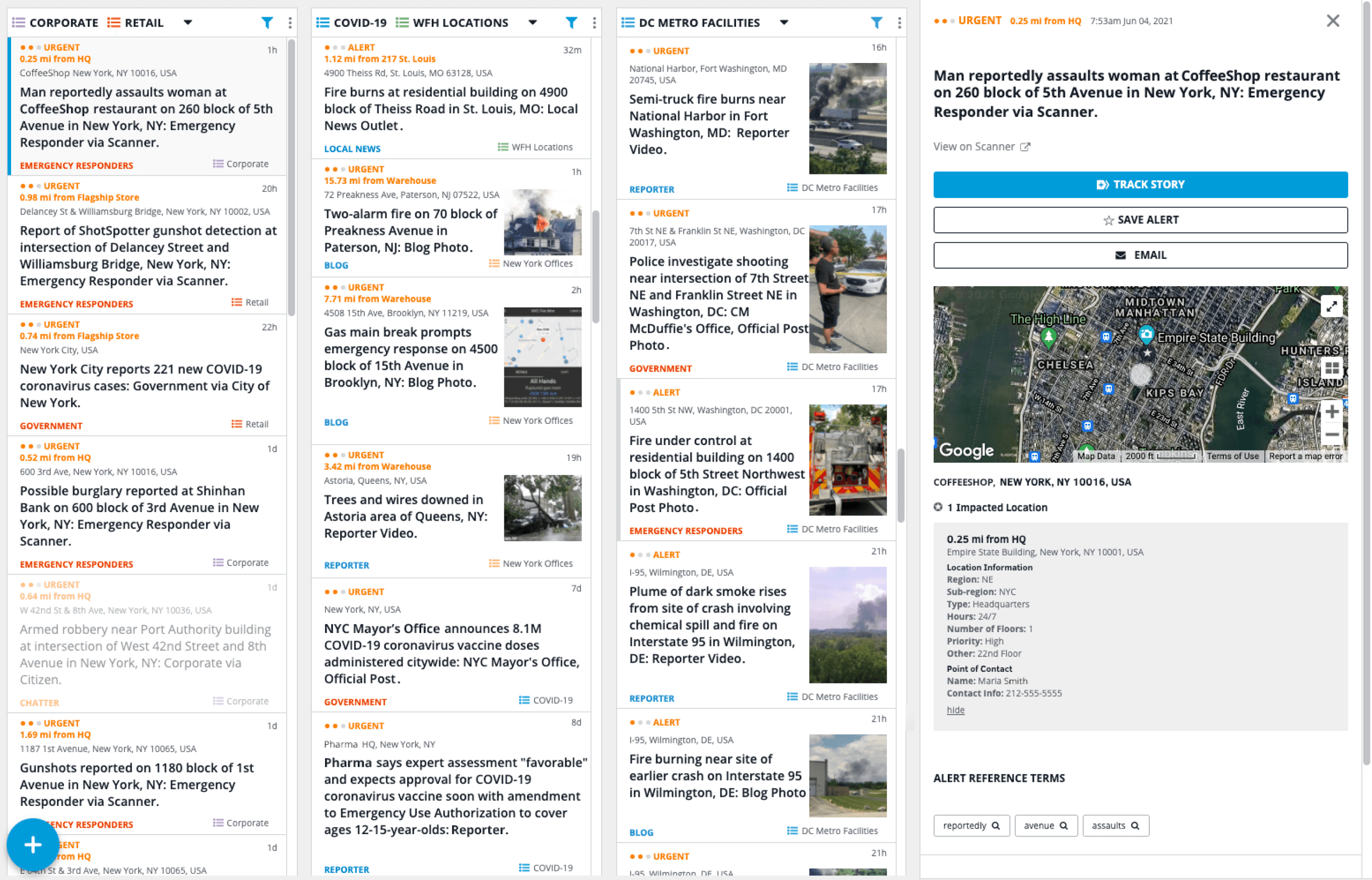
A single radius applied to all alert topics like weather, crime, and infrastructure, caused alert noise and missed threats
Design Process
(02)
Design Process
(02)
Research revealed a single radius oversimplifies threat assessment—urgency is contextual, driven by asset type, event type, and proximity
I interviewed analysts across tech, shipping, and sporting event industries to understand their Critical Event Management strategies. All emphasized that limited radius options were the primary cause of alerting noise.
Acquisition Integration
Mid-project, Dataminr acquired a third party mapping platform. Their product lead argued we adopt an event-centric radius, since that was validated with banking users.
My response:
Presented to Director of Product with research evidence and engineering spike showing 18-24 months of migration with no clear benefit. Leadership agreed to build on our existing paradigm.
Solution
(04)
Solution
(04)
Analysts configure alerts the way they think about threats—not the way the system was built
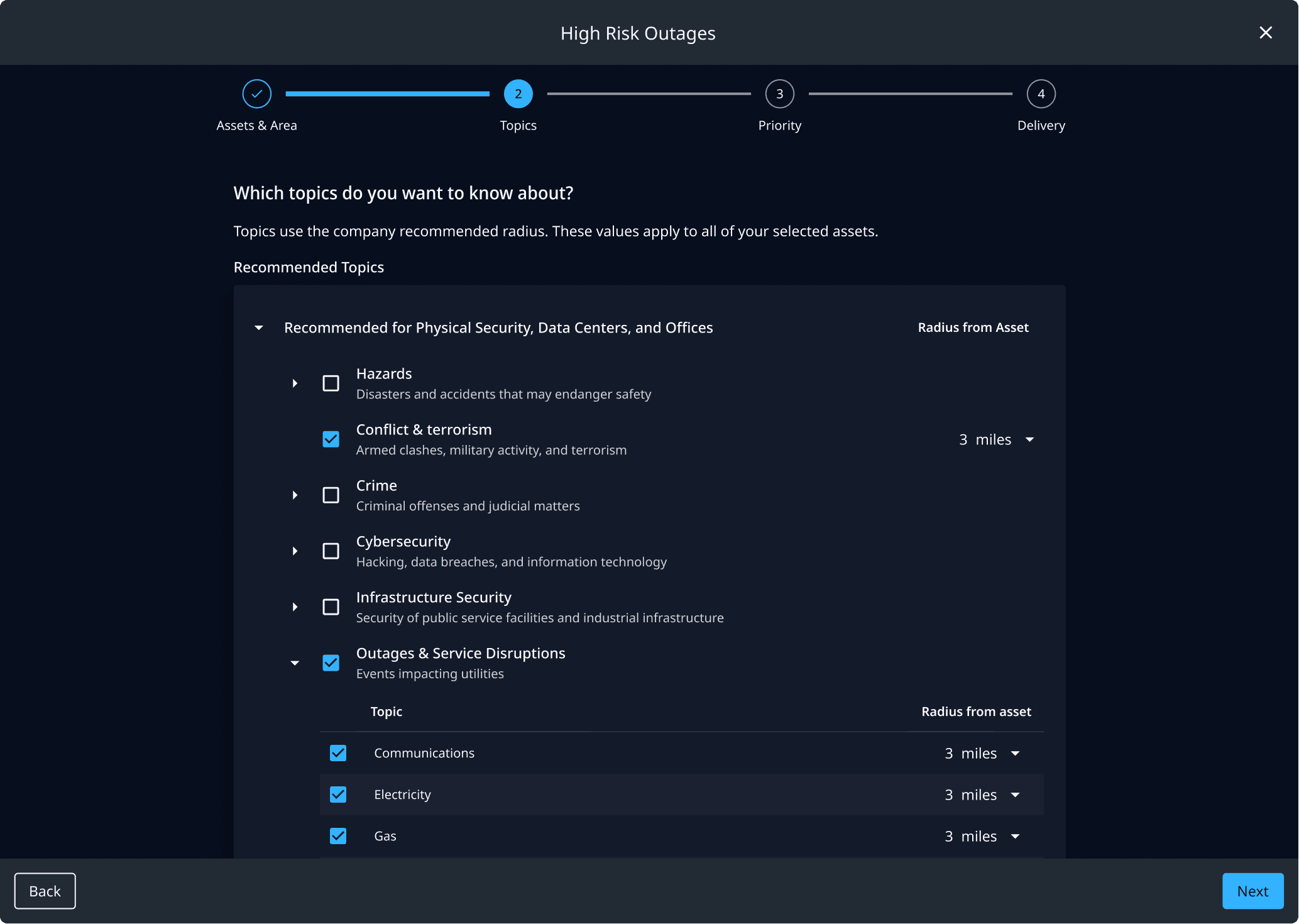
Per-list customization for specific event types
Expanded from cramped modal to full-screen design based on user feedback
Smart defaults: step one filters step two, changes save automatically
Advanced settings accessible for power users, optional for standard workflows
85% of analysts rely on the recommended values, while power users can access advanced controls when needed.
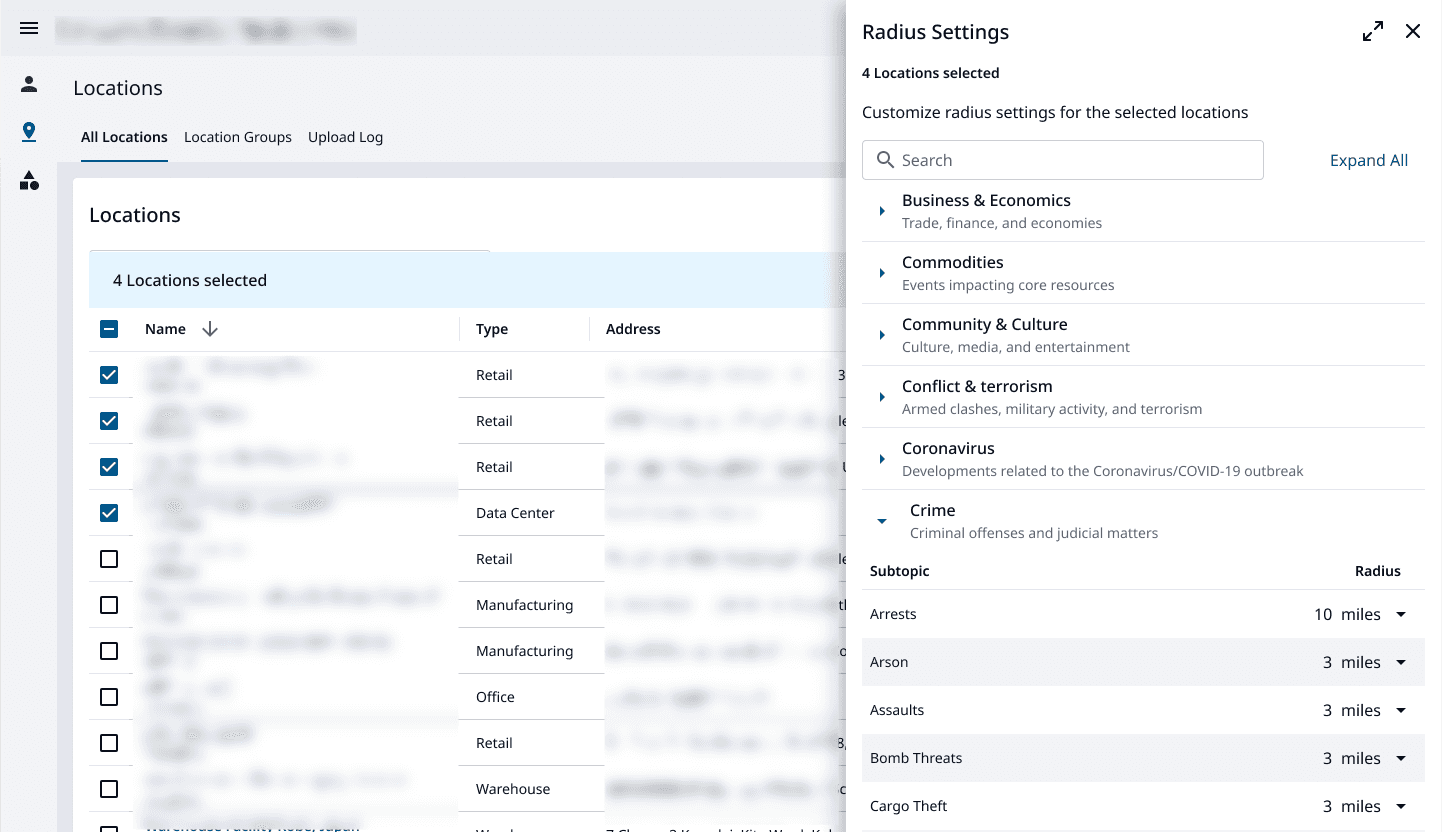
Defaults set during onboarding using industry and monitoring needs
Default radius values defined during customer onboarding are the foundation to improved alerting scope.
Default settings address the company monitoring needs, opening the door to a scalable settings solution.
The system monitors radius changes across alert lists to train recommendation models.
Impact & Outcomes
(05)
Impact & Outcomes
(05)
I designed a solution that provides quick setup and customization to address risk assessment needs and varying experience levels.
250K+ security analysts gained contextual alert configuration
Initiated alerts-vs-rejected-signals analysis with data team—support tickets decreased, user feedback improved
Key at-risk customers renewed after launch
Avoided 18-24 month migration and disruption to existing configurations by building the case against the acquired paradigm
Advocated for platform-wide adoption—product team applied contextual settings framework to wind speeds, water levels, earthquake magnitudes
more Projects.
© patrick cartelli
more Projects.
© patrick cartelli
Precision Alert Monitoring
How Smart Defaults Reduced Alert Noise by 20%
Role
Product Design
/
Company
Dataminr
/
Industry
Real-time Security Intelligence
/
Duration
3 Months
/
Year
2022
Precision Alert Monitoring
How Smart Defaults Reduced Alert Noise by 20%
Role
Product Design
/
Company
Dataminr
/
Industry
Real-time Security Intelligence
/
Duration
3 Months
/
Year
2022
Precision Alert Monitoring
How Smart Defaults Reduced Alert Noise by 20%
Role
Product Design
/
Company
Dataminr
/
Industry
Real-time Security Intelligence
/
Duration
3 Months
/
Year
2022
Precision Alert Monitoring
How Smart Defaults Reduced Alert Noise by 20%
Role
Product Design
Company
Dataminr
Industry
Real-time Security Intelligence
Duration
3 Months
Year
2022
more Projects.
© patrick cartelli
more Projects.
© patrick cartelli
Overview
(00)
Overview
(00)
Security analysts use Dataminr to monitor for emerging risks. When a threat arises, security teams need to act fast.
A critical missed alert endangered lives and threatened key customer relationships. Rigid radius settings forced all alert types to use the same geographic coverage—creating noise and missed threats.
My research defined the problem: customers assess risk by proximity to assets, not radius circles. This insight shaped product direction during a post-acquisition debate.
I designed a solution that delivers critical information when security teams need it most.
Understanding the Problem
(01)
Understanding the Problem
(01)
Too wide = overwhelming noise. Too narrow = missed threats.
Customers duplicated location groups as workarounds
Result: Critical missed alert, churn threats from key accounts
A single radius applied to all alert topics like weather, crime, and infrastructure, caused alert noise and missed threats
Design Process
(02)
Design Process
(02)
Research revealed a single radius oversimplifies threat assessment—urgency is contextual, driven by asset type, event type, and proximity
I interviewed analysts across tech, shipping, and sporting event industries to understand their Critical Event Management strategies. All emphasized that limited radius options were the primary cause of alerting noise.
Acquisition Integration
Mid-project, Dataminr acquired a third party mapping platform. Their product lead argued we adopt an event-centric radius, since that was validated with banking users.
My response:
Presented to Director of Product with research evidence and engineering spike showing 18-24 months of migration with no clear benefit. Leadership agreed to build on our existing paradigm.
Solution
(04)
Solution
(04)
Per-list customization for specific event types
Expanded from cramped modal to full-screen design based on user feedback
Smart defaults: step one filters step two, changes save automatically
Advanced settings accessible for power users, optional for standard workflows
85% of analysts rely on the recommended values, while power users can access advanced controls when needed.
Defaults set during onboarding using industry and monitoring needs
Default radius values defined during customer onboarding are the foundation to improved alerting scope.
Default settings address the company monitoring needs, opening the door to a scalable settings solution.
The system monitors radius changes across alert lists to train recommendation models.
Analysts configure alerts the way they think about threats—not the way the system was built
Impact & Outcomes
(05)
Impact & Outcomes
(05)
I designed a solution that provides quick setup and customization to address risk assessment needs and varying experience levels.
250K+ security analysts gained contextual alert configuration
Initiated alerts-vs-rejected-signals analysis with data team—support tickets decreased, user feedback improved
Key at-risk customers renewed after launch
Avoided 18-24 month migration and disruption to existing configurations by building the case against the acquired paradigm
Advocated for platform-wide adoption—product team applied contextual settings framework to wind speeds, water levels, earthquake magnitudes
more Projects.
© patrick cartelli
more Projects.
© patrick cartelli
Overview
(00)
Overview
(00)
Security analysts use Dataminr to monitor for emerging risks. When a threat arises, security teams need to act fast.
A critical missed alert endangered lives and threatened key customer relationships. Rigid radius settings forced all alert types to use the same geographic coverage—creating noise and missed threats.
My research defined the problem: customers assess risk by proximity to assets, not radius circles. This insight shaped product direction during a post-acquisition debate.
I designed a solution that delivers critical information when security teams need it most.
Understanding the Problem
(01)
Understanding the Problem
(01)
A single radius applied to all alert types—weather, crime, infrastructure—caused alert noise and missed threats
Too wide = overwhelming noise. Too narrow = missed threats.
Customers duplicated location groups as workarounds
Result: Critical missed alert, churn threats from key accounts
Design Process
(02)
Design Process
(02)
Research revealed a single radius oversimplifies threat assessment—urgency is contextual, driven by asset type, event type, and proximity
I interviewed analysts across tech, shipping, and sporting event industries to understand their Critical Event Management strategies. All emphasized that limited radius options were the primary cause of alerting noise.
Acquisition Integration
Mid-project, Dataminr acquired a third party mapping platform. Their product lead argued we adopt an event-centric radius, since that was validated with banking users.
My response:
Presented to Director of Product with research evidence and engineering spike showing 18-24 months of migration with no clear benefit. Leadership agreed to build on our existing paradigm.
Solution
(04)
Solution
(04)
Per-list customization for specific event types
Expanded from cramped modal to full-screen design based on user feedback
Smart defaults: step one filters step two, changes save automatically
Advanced settings accessible for power users, optional for standard workflows
85% of analysts rely on the recommended values, while power users can access advanced controls when needed.
Defaults set during onboarding using industry and monitoring needs
Default radius values defined during customer onboarding are the foundation to improved alerting scope.
Default settings address the company monitoring needs, opening the door to a scalable settings solution.
The system monitors radius changes across alert lists to train recommendation models.
Analysts configure alerts the way they think about threats—not the way the system was built
Impact & Outcomes
(05)
Impact & Outcomes
(05)
I designed a solution that provides quick setup and customization to address risk assessment needs and varying experience levels.
250K+ security analysts gained contextual alert configuration
Initiated alerts-vs-rejected-signals analysis with data team—support tickets decreased, user feedback improved
Key at-risk customers renewed after launch
Avoided 18-24 month migration and disruption to existing configurations by building the case against the acquired paradigm
Advocated for platform-wide adoption—product team applied contextual settings framework to wind speeds, water levels, earthquake magnitudes