Mission-Critical Trust
Designing Trusted Bulk Operations for Security Teams
Role
Product Design
/
Company
Dataminr
/
Industry
Real-time Security Intelligence
/
Duration
3 Months
/
Year
2022
Overview
(00)
Security managers configure alert monitoring for as many as 300,000 analyst accounts. When a threat arises, analysts need to trust they'll receive the right alerts.
Managers couldn't trust what Dataminr delivered. No preview of changes, no visibility into configurations, no way to verify content hadn't drifted.
My research shifted roadmap priorities to trusted content assignment at scale.
My solution redesigned how security managers configure monitoring dashboards, enabling 250K+ analysts to receive trusted alert monitoring.
Understanding the Problem
(01)
Managers couldn't predict how monitoring configurations would behave, creating dangerous gaps in crisis coverage with life-threatening consequences.
No preview of configuration changes
No visibility into what changed or when
Content drift was invisible without painstaking sandbox testing
Result: Widespread workarounds—duplicated dashboards, sandbox portals—encouraged by Dataminr itself
Design Process
(02)
Research revealed dashboard management was the wrong priority—trusted content assignment at scale came first
What I learned: Even with 250K+ users receiving alerts, a smaller portion used web dashboards. The real pain was content management at scale and lack of trust in assignments.
Stakeholder resistance: Public sector stakeholders worried flexibility would break existing monitoring or introduce more error.
My response: User discovery sessions showed how painful content management had become and how little managers trusted what Dataminr provided. Workarounds like sandbox portals and duplicated content highlighted the extent of the problem. Stakeholders agreed to move forward.
Solution
(04)
Managers know what they want to monitor and who should do the work—the system now helps them trust it will happen
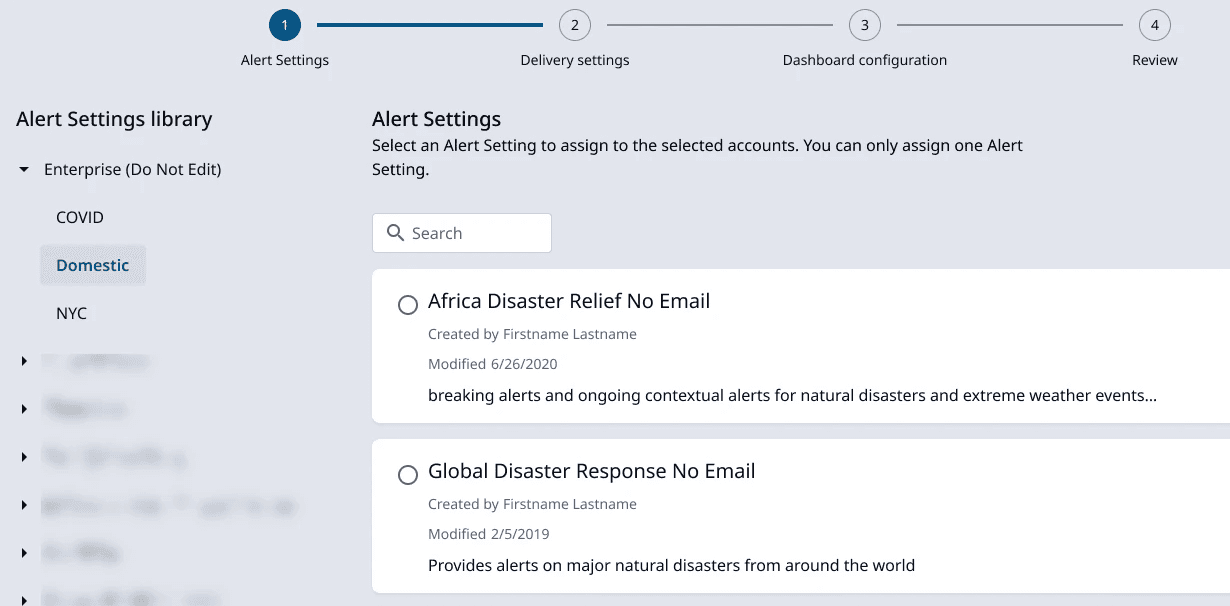
Content Assignment
Select content, configure monitoring assignments, choose accounts and groups
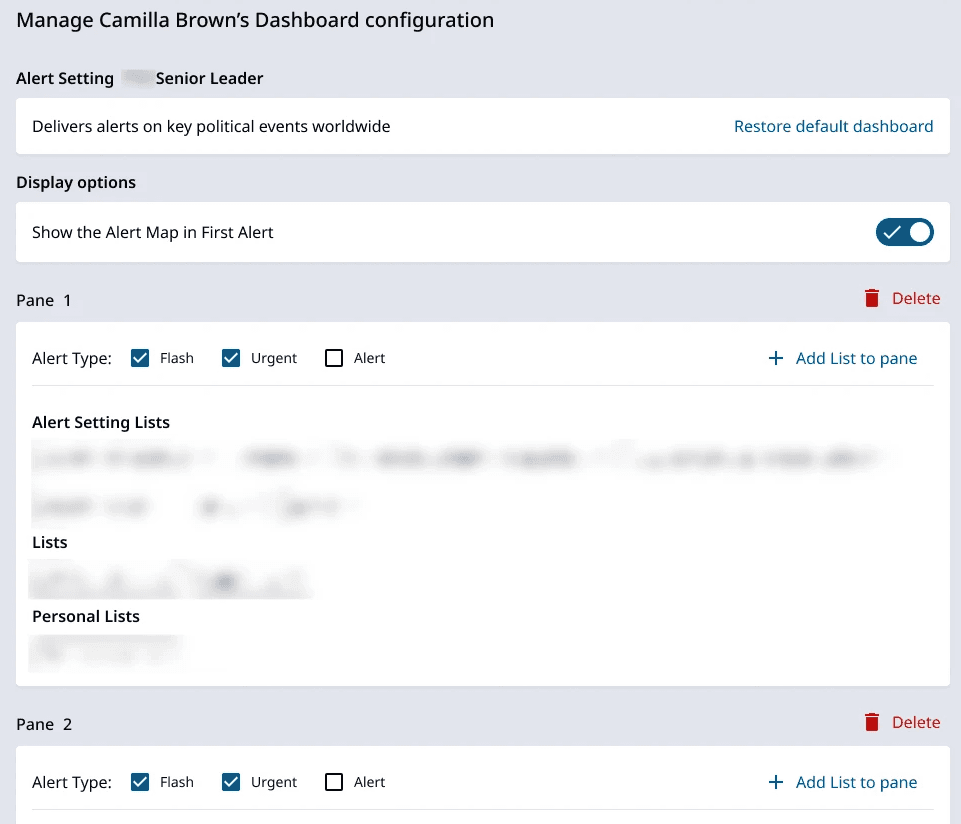
Configuring Dashboards
Reset to baseline: Restore dashboards to default preferences when configurations break
Confidentiality by design: Users receive assignments without exposing mission-sensitive information
Review
User visibility: Track what users are actively monitoring
Review before apply: Preview assignments to prevent mistakes. Managers could verify before committing for the first time.
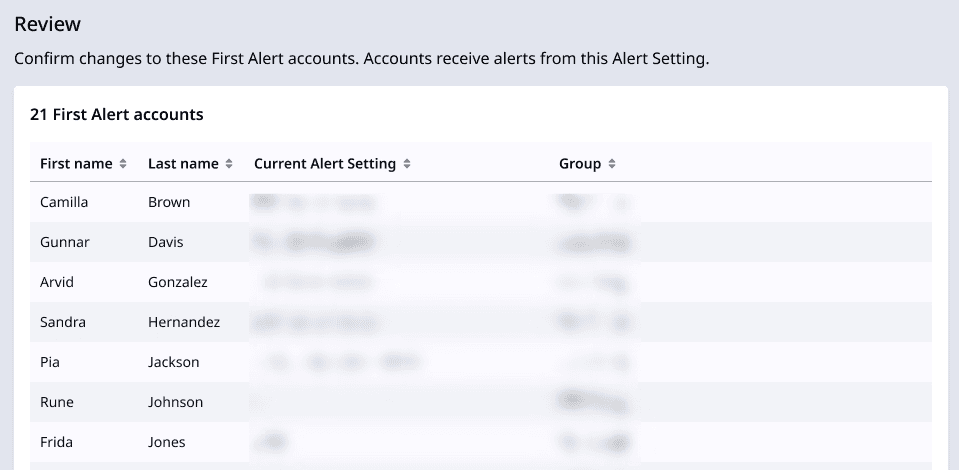
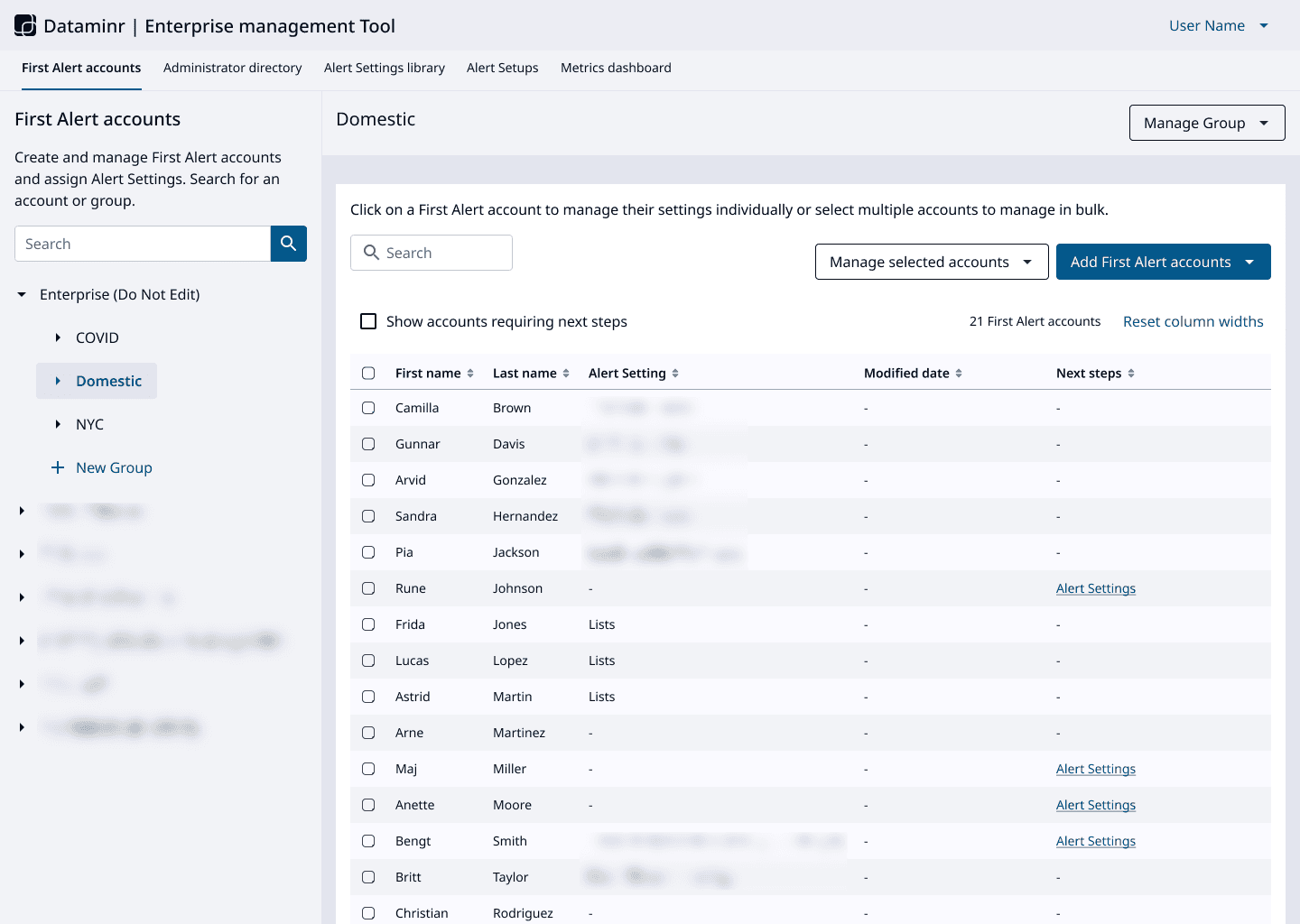
Manage monitoring assignments at scale
System Level Impact
This work established reusable patterns across Dataminr's product ecosystem:
I deployed the bulk action component in 3 other admin interfaces
Teams extended the dashboard configuration workflow to private-sector products
Progressive disclosure pattern became Dataminr's standard for high-risk operations
The content-first approach influenced how Dataminr thinks about admin tooling: users define what needs to happen, the system handles how.
Impact & Outcomes
(05)
Enabled trusted customization for 250,000+ security analysts and established reusable patterns deployed cross-platform.
One user noted:
"This finally gives managers the control they need without the risk they fear."
Scale Impact: Dashboard customization for 250,000+ security analysts across Dataminr's customer base.
Validation: Support tickets dropped 45% while adoption increased 40%—proving flexibility with verification reduces risk.
Business Results: Unblocked expansion into 10,000+ user accounts and became a key RFP differentiator.
Systems-Level Impact: I established reusable patterns deployed cross-platform, influencing how Dataminr approaches admin tooling: users define what needs to happen, the system handles how.
Mission-Critical Trust
Designing Trusted Bulk Operations for Security Teams
Role
Product Design
/
Company
Dataminr
/
Industry
Real-time Security Intelligence
/
Duration
3 Months
/
Year
2022
Overview
(00)
Security managers configure alert monitoring for as many as 300,000 analyst accounts. When a threat arises, analysts need to trust they'll receive the right alerts.
Managers couldn't trust what Dataminr delivered. No preview of changes, no visibility into configurations, no way to verify content hadn't drifted.
My research shifted roadmap priorities to trusted content assignment at scale.
My solution redesigned how security managers configure monitoring dashboards, enabling 250K+ analysts to receive trusted alert monitoring.
Understanding the Problem
(01)
Managers couldn't predict how monitoring configurations would behave, creating dangerous gaps in crisis coverage with life-threatening consequences.
No preview of configuration changes
No visibility into what changed or when
Content drift was invisible without painstaking sandbox testing
Result: Widespread workarounds—duplicated dashboards, sandbox portals—encouraged by Dataminr itself
Design Process
(02)
Research revealed dashboard management was the wrong priority—trusted content assignment at scale came first
What I learned: Even with 250K+ users receiving alerts, a smaller portion used web dashboards. The real pain was content management at scale and lack of trust in assignments.
Stakeholder resistance: Public sector stakeholders worried flexibility would break existing monitoring or introduce more error.
My response: User discovery sessions showed how painful content management had become and how little managers trusted what Dataminr provided. Workarounds like sandbox portals and duplicated content highlighted the extent of the problem. Stakeholders agreed to move forward.
Solution
(04)
Managers know what they want to monitor and who should do the work—the system now helps them trust it will happen
Content Assignment
Content assignment: Select content, configure alert settings, choose accounts and groups
Customizing Alerting Behavior
Reset to baseline: Restore dashboards to default preferences when configurations break
Review Assignment
User visibility: Track what users are actively monitoring
Review before apply: Preview assignments to prevent mistakes. Managers could verify before committing for the first time.
System Level Impact
This work established reusable patterns across Dataminr's product ecosystem:
I deployed the bulk action component in 3 other admin interfaces
Teams extended the dashboard configuration workflow to private-sector products
Progressive disclosure pattern became Dataminr's standard for high-risk operations
The content-first approach influenced how Dataminr thinks about admin tooling: users define what needs to happen, the system handles how.
Manage monitoring assignments at scale
Impact & Outcomes
(05)
Enabled trusted customization for 250,000+ security analysts and established reusable patterns deployed cross-platform.
One user noted:
"This finally gives managers the control they need without the risk they fear."
Scale Impact: Dashboard customization for 250,000+ security analysts across Dataminr's customer base.
Validation: Support tickets dropped 45% while adoption increased 40%—proving flexibility with verification reduces risk.
Business Results: Unblocked expansion into 10,000+ user accounts and became a key RFP differentiator.
Systems-Level Impact: I established reusable patterns deployed cross-platform, influencing how Dataminr approaches admin tooling: users define what needs to happen, the system handles how.
Mission-Critical Trust
Designing Trusted Bulk Operations for Security Teams
Role
Product Design
Company
Dataminr
Industry
Real-time Security Intelligence
Duration
3 Months
Year
2022
Overview
(00)
My solution redesigned how security managers configure monitoring dashboards, enabling 250K+ analysts to receive trusted alert monitoring.
Security managers configure alert monitoring for as many as 300,000 analyst accounts. When a threat arises, analysts need to trust they'll receive the right alerts.
Managers couldn't trust what Dataminr delivered. No preview of changes, no visibility into configurations, no way to verify content hadn't drifted.
My research shifted roadmap priorities to trusted content assignment at scale.
Understanding the Problem
(01)
Managers couldn't predict how monitoring configurations would behave, creating dangerous gaps in crisis coverage with life-threatening consequences.
No preview of configuration changes
No visibility into what changed or when
Content drift was invisible without painstaking sandbox testing
Result: Widespread workarounds—duplicated dashboards, sandbox portals—encouraged by Dataminr itself
Design Process
(02)
Research revealed dashboard management was the wrong priority—trusted content assignment at scale came first
What I learned: Even with 250K+ users receiving alerts, a smaller portion used web dashboards. The real pain was content management at scale and lack of trust in assignments.
Stakeholder resistance: Public sector stakeholders worried flexibility would break existing monitoring or introduce more error.
My response: User discovery sessions showed how painful content management had become and how little managers trusted what Dataminr provided. Workarounds like sandbox portals and duplicated content highlighted the extent of the problem. Stakeholders agreed to move forward.
Solution
(04)
Managers know what they want to monitor and who should do the work—the system now helps them trust it will happen
Content Assignment
Content assignment: Select content, configure alert settings, choose accounts and groups
Customizing Alerting Behavior
Reset to baseline: Restore dashboards to default preferences when configurations break
Review Assignment
User visibility: Track what users are actively monitoring
Review before apply: Preview assignments to prevent mistakes. Managers could verify before committing for the first time.
System Level Impact
This work established reusable patterns across Dataminr's product ecosystem:
I deployed the bulk action component in 3 other admin interfaces
Teams extended the dashboard configuration workflow to private-sector products
Progressive disclosure pattern became Dataminr's standard for high-risk operations
The content-first approach influenced how Dataminr thinks about admin tooling: users define what needs to happen, the system handles how.
Manage monitoring assignments at scale
Impact & Outcomes
(05)
Enabled trusted customization for 250,000+ security analysts and established reusable patterns deployed cross-platform.
One user noted:
"This finally gives managers the control they need without the risk they fear."
Scale Impact: Dashboard customization for 250,000+ security analysts across Dataminr's customer base.
Validation: Support tickets dropped 45% while adoption increased 40%—proving flexibility with verification reduces risk.
Business Results: Unblocked expansion into 10,000+ user accounts and became a key RFP differentiator.
Systems-Level Impact: I established reusable patterns deployed cross-platform, influencing how Dataminr approaches admin tooling: users define what needs to happen, the system handles how.