The Check-In Problem
A system design failure hiding behind 'forgetful users'
Role
Product Design
/
Company
Gympass
/
Industry
Fitness & Wellness
/
Duration
2 Months
/
Year
2020
Overview
(00)
Gympass gives employees access to a network of gyms and fitness classes through their employers. Users check in via the app so Gympass can verify attendance and pay partner gyms. But users weren't checking in, forcing Gympass to manually verify attendance after the fact with no way to distinguish legitimate missed check-ins from fraud. This was costing nearly six figures annually.
The assumption was user forgetfulness.
My research across 16 countries revealed the real problem: Gympass was the only platform requiring dual validation (app check-in plus gym access control). I reframed this from a user behavior problem to a system design failure and developed a phased check-in strategy. COVID-19 halted gyms before measurement, but the framework guided the team's reopening roadmap.
Understanding the Problem
(01)
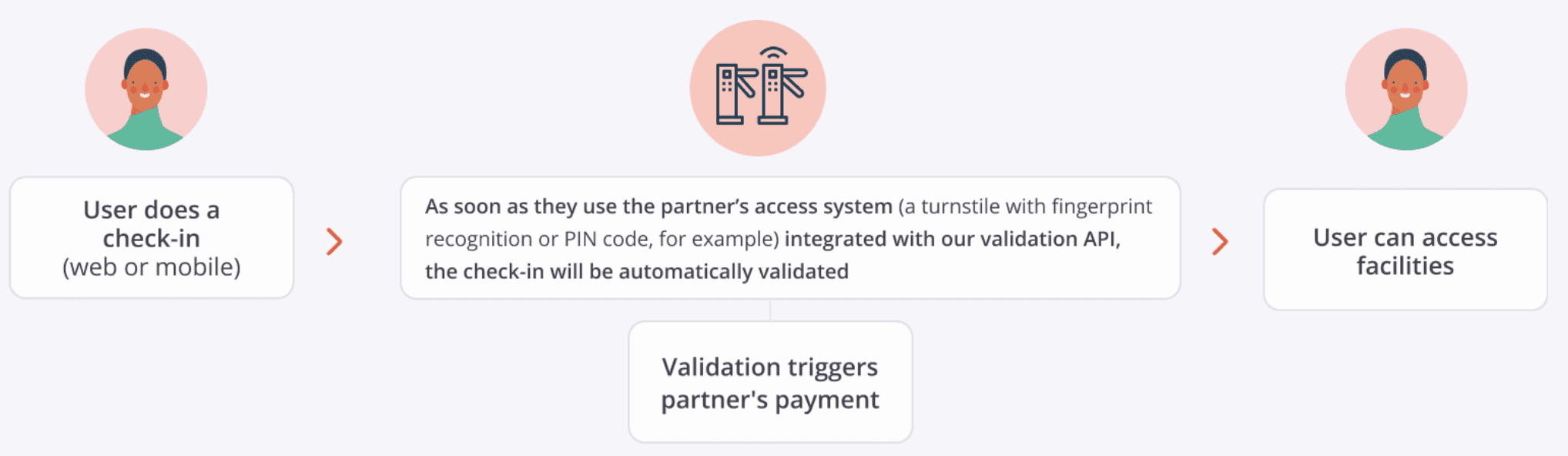
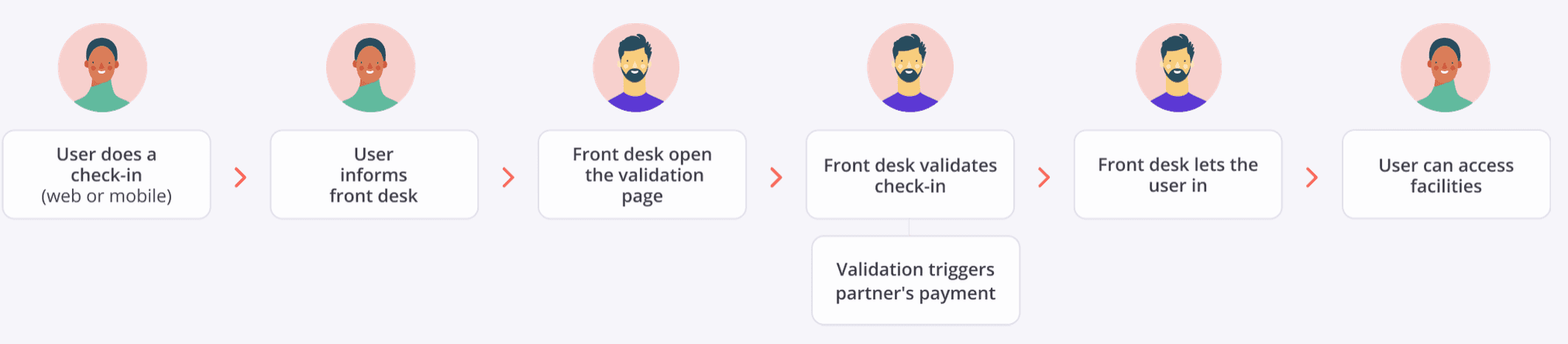
The check-in experience varied wildly across the gym network. Some required access codes, others confirmation screens, others QR scans. Users couldn't predict what would be required.
Business impact:
Operational overhead from manual verification
Fraud detection gaps
Partner impact:
Front desk staff confused about validation processes
No consistency across the network
Gyms Integrated with Gympass
Gyms without Gympass Integration
Discovery
(02)
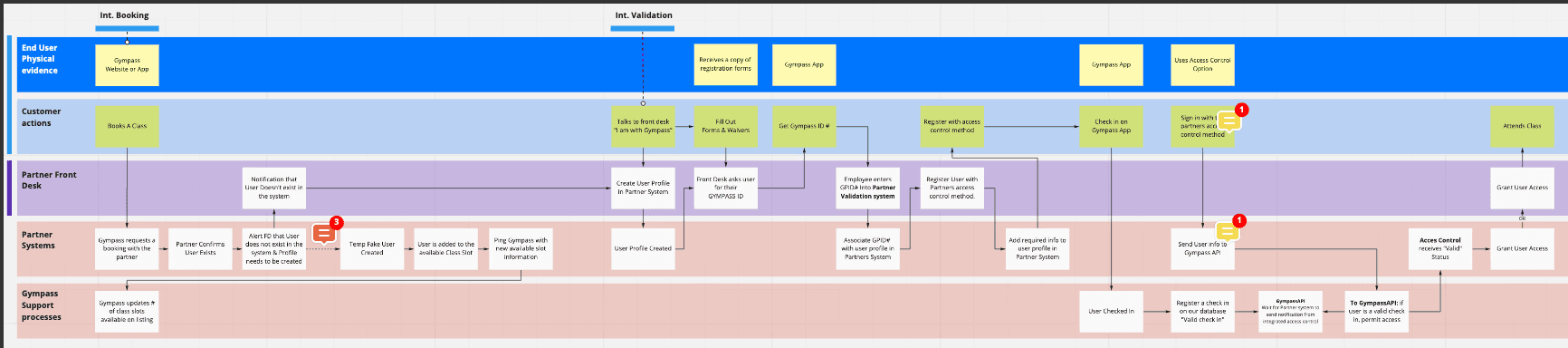
Research revealed system architecture was the real problem
I mapped the complete ecosystem through service blueprints, user interviews, partner feedback, and quantitative analysis.
The Challenge
16 countries worth of data with no clear starting point. I couldn't talk directly to gyms or gymgoers, so I relied on support tickets, partner operations feedback, and behavioral data to triangulate user pain points.
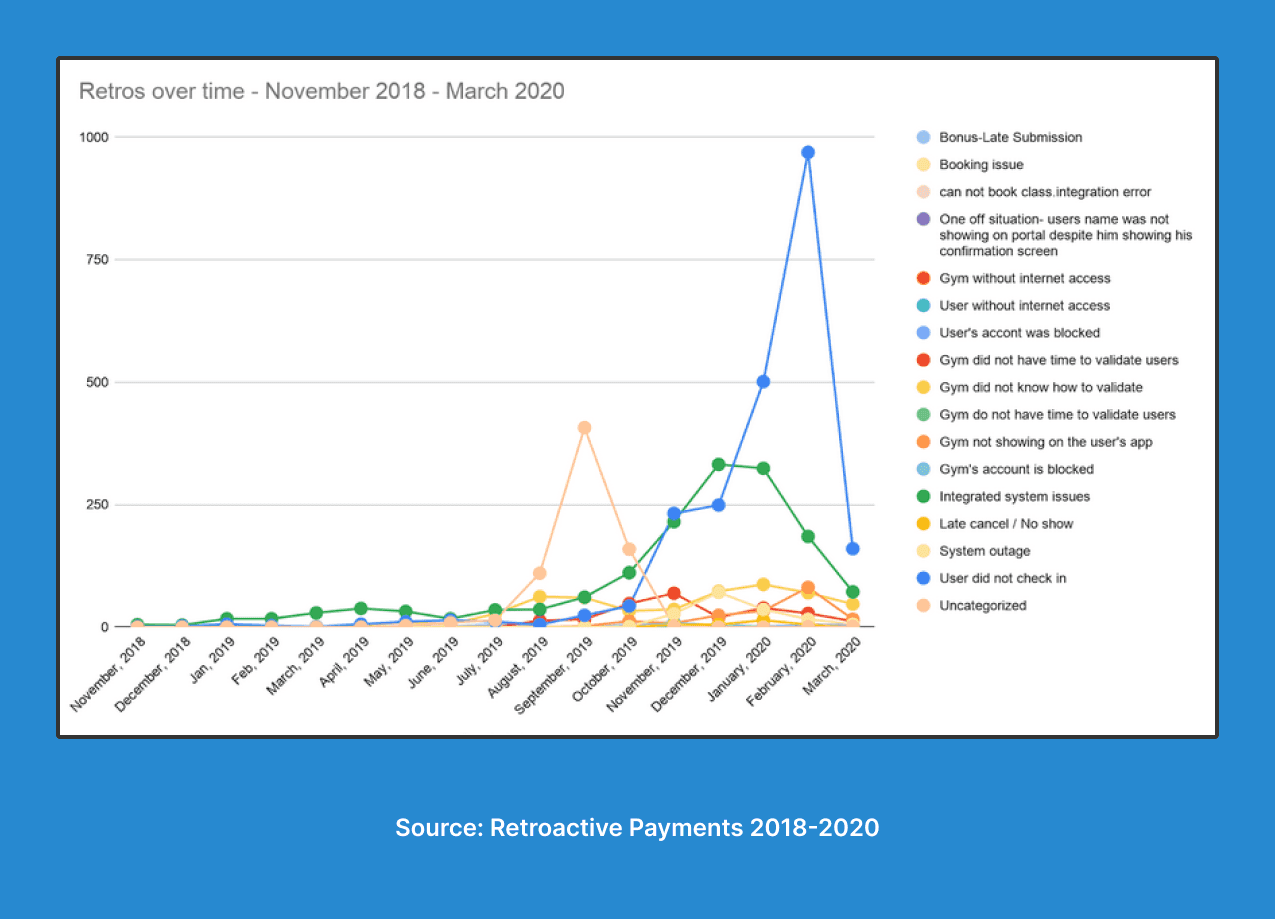
Quantitative analysis
Analyzed Tableau dashboards for check-in patterns by business type, geography, user segments, drop-off points.
Only 7% of 52,000 gyms had integrated booking, meaning the vast majority had no system connection to Gympass at all.
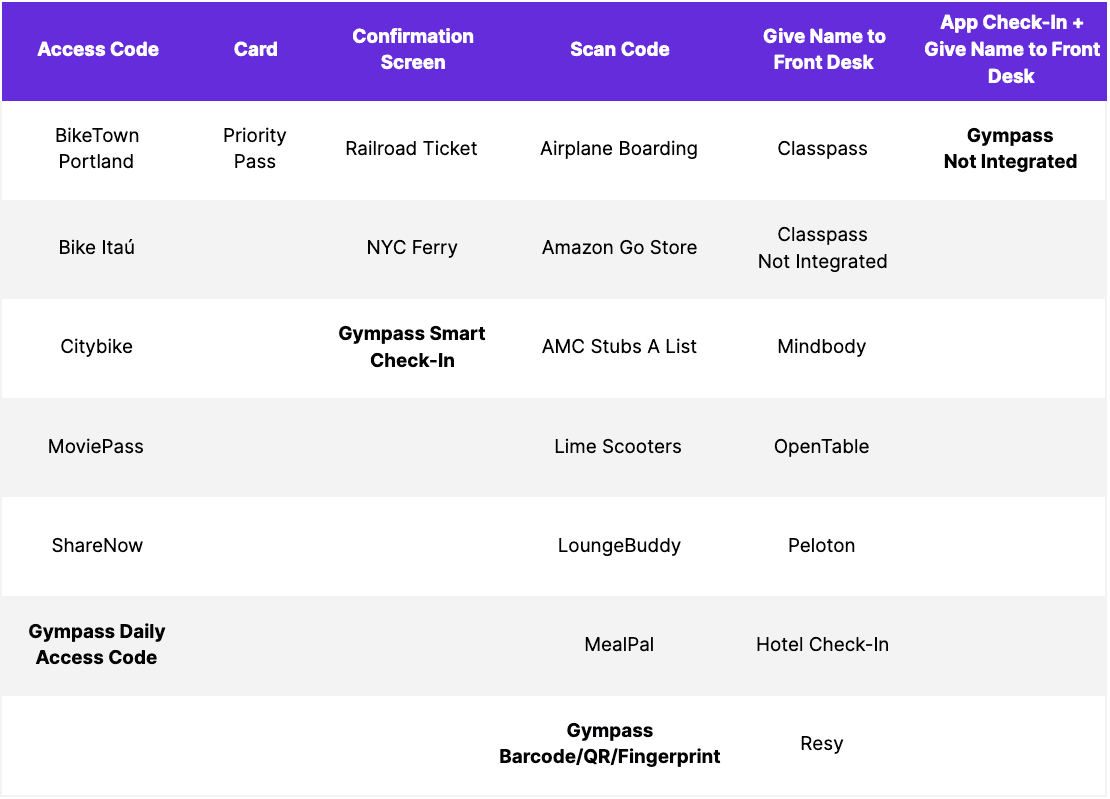
The critical insight came from competitive analysis
Gympass was the only platform requiring dual validation. Users had to check in with Gympass AND use the gym's own access control.
No competitor imposed this friction.
Forgetting to check in or intentionally leaving phones behind during workouts were rational responses to a broken system.
Solutions
(03)
I developed a phased strategy addressing root causes rather than symptoms:
Immediate: Push notifications for booked classes
Target users with confirmed bookings when they arrive at the gym.
Addresses forgetfulness (primary user behavior)
Works across all gym types regardless of integration level
Medium-term: Reactive check-in
Front desk staff submit user ID when phones aren't available.
I designed a validation flow that cross-referenced booked classes, past attendance patterns, and other datapoints to assess likelihood of actual attendance.
High-confidence matches showed as valid check-ins in integrated gym systems.
Low-confidence cases prompted staff confirmation and flagged users for potential fraud review.
First-time users defaulted to front desk verification since they had no attendance history to validate against.
Long-term: Automatic check-in
ML model analyzes check-in history, motion data, and location patterns to predict and automate check-ins—eliminating user friction entirely.
Impact & Outcomes
(04)
COVID context: Global gym closures in early 2020 halted implementation. Research framework and phased strategy informed the team's roadmap as facilities reopened.
Research foundation:
My research established the first comprehensive baseline metrics across check-in rates by business type, country, and user segment. The service blueprints I created documented the complete ecosystem for the first time, giving the team a foundation to measure improvements as gyms reopened.
Strategic influence:
Post-reopening, the team followed my phased approach and maintained cross-functional alignment around ecosystem thinking rather than isolated feature fixes.
The Check-In Problem
A system design failure hiding behind 'forgetful users'
Role
Product Design
/
Company
Gympass
/
Industry
Fitness & Wellness
/
Duration
2 Months
/
Year
2020
Overview
(00)
Gympass gives employees access to a network of gyms and fitness classes through their employers. Users check in via the app so Gympass can verify attendance and pay partner gyms. But users weren't checking in, forcing Gympass to manually verify attendance after the fact with no way to distinguish legitimate missed check-ins from fraud. This was costing nearly six figures annually.
The assumption was user forgetfulness.
My research across 16 countries revealed the real problem: Gympass was the only platform requiring dual validation (app check-in plus gym access control). I reframed this from a user behavior problem to a system design failure and developed a phased check-in strategy. COVID-19 halted gyms before measurement, but the framework guided the team's reopening roadmap.
Understanding the Problem
(01)
The check-in experience varied wildly across the gym network. Some required access codes, others confirmation screens, others QR scans. Users couldn't predict what would be required.
Business impact:
Operational overhead from manual retroactive verification
Fraud detection gaps
Partner impact:
Front desk staff confused about validation processes
No consistency across the network
Gyms Integrated with Gympass
Gyms without Gympass Integration
Discovery
(02)
Research revealed system architecture was the real problem
I mapped the complete ecosystem through service blueprints, user interviews, partner feedback, and quantitative analysis.
The Challenge
16 countries worth of data with no clear starting point. I couldn't talk directly to gyms or gymgoers, so I relied on support tickets, partner operations feedback, and behavioral data to triangulate user pain points.
Quantitative analysis
Analyzed Tableau dashboards for check-in patterns by business type, geography, user segments, drop-off points.
Only 7% of 52,000 gyms had integrated booking, meaning the vast majority had no system connection to Gympass at all.
The critical insight came from competitive analysis
Gympass was the only platform requiring dual validation. Users had to check in with Gympass AND use the gym's own access control.
No competitor imposed this friction.
Forgetting to check in or intentionally leaving phones behind during workouts were rational responses to a broken system.
Solutions
(03)
I developed a phased strategy addressing root causes rather than symptoms:
Immediate: Push notifications for booked classes
Target users with confirmed bookings when they arrive at the gym.
Addresses forgetfulness (primary user behavior)
Works across all gym types regardless of integration level
Medium-term: Reactive check-in
Front desk staff submit user ID when phones aren't available.
I designed a validation flow that cross-referenced booked classes, past attendance patterns, and other datapoints to assess likelihood of actual attendance.
High-confidence matches showed as valid check-ins in integrated gym systems.
Low-confidence cases prompted staff confirmation and flagged users for potential fraud review.
First-time users defaulted to front desk verification since they had no attendance history to validate against.
Long-term: Automatic check-in
ML model analyzes check-in history, motion data, and location patterns to predict and automate check-ins—eliminating user friction entirely.
Impact & Outcomes
(04)
COVID context: Global gym closures in early 2020 halted implementation. Research framework and phased strategy informed the team's roadmap as facilities reopened.
Research foundation:
My research established the first comprehensive baseline metrics across check-in rates by business type, country, and user segment. The service blueprints I created documented the complete ecosystem for the first time, giving the team a foundation to measure improvements as gyms reopened.
Strategic influence:
Post-reopening, the team followed my phased approach and maintained cross-functional alignment around ecosystem thinking rather than isolated feature fixes.
The Check-In Problem
A system design failure hiding behind 'forgetful users'
Role
Product Design
Company
Gympass
Industry
Fitness & Wellness
Duration
2 Months
Year
2020
Impact & Outcomes
(04)
COVID context: Global gym closures in early 2020 halted implementation. Research framework and phased strategy informed the team's roadmap as facilities reopened.
Research foundation:
My research established the first comprehensive baseline metrics across check-in rates by business type, country, and user segment. The service blueprints I created documented the complete ecosystem for the first time, giving the team a foundation to measure improvements as gyms reopened.
Strategic influence:
Post-reopening, the team followed my phased approach and maintained cross-functional alignment around ecosystem thinking rather than isolated feature fixes.
Solutions
(03)
I developed a phased strategy addressing root causes rather than symptoms:
Immediate: Push notifications for booked classes
Target users with confirmed bookings when they arrive at the gym.
Addresses forgetfulness (primary user behavior)
Works across all gym types regardless of integration level
Medium-term: Reactive check-in
Front desk staff submit user ID when phones aren't available.
I designed a validation flow that cross-referenced booked classes, past attendance patterns, and other datapoints to assess likelihood of actual attendance.
High-confidence matches showed as valid check-ins in integrated gym systems.
Low-confidence cases prompted staff confirmation and flagged users for potential fraud review.
First-time users defaulted to front desk verification since they had no attendance history to validate against.
Long-term: Automatic check-in
ML model analyzes check-in history, motion data, and location patterns to predict and automate check-ins—eliminating user friction entirely.
Discovery
(02)
Research revealed system architecture was the real problem
I mapped the complete ecosystem through service blueprints, user interviews, partner feedback, and quantitative analysis.
The Challenge
16 countries worth of data with no clear starting point. I couldn't talk directly to gyms or gymgoers, so I relied on support tickets, partner operations feedback, and behavioral data to triangulate user pain points.
Quantitative analysis
Analyzed Tableau dashboards for check-in patterns by business type, geography, user segments, drop-off points.
Only 7% of 52,000 gyms had integrated booking, meaning the vast majority had no system connection to Gympass at all.
The critical insight came from competitive analysis: Gympass was the only platform requiring dual validation. Users had to check in with Gympass AND use the gym's own access control.
No competitor imposed this friction.
Forgetting to check in or intentionally leaving phones behind during workouts were rational responses to a broken system.
Understanding the Problem
(01)
The check-in experience varied wildly across the gym network. Some required access codes, others confirmation screens, others QR scans. Users couldn't predict what would be required.
Business impact:
Operational overhead from manual retroactive verification
Fraud detection gaps
Partner impact:
Front desk staff confused about validation processes
No consistency across the network
Gyms Integrated with Gympass
Gyms without Gympass Integration
Overview
(00)
Gympass gives employees access to a network of gyms and fitness classes through their employers. Users check in via the app so Gympass can verify attendance and pay partner gyms. But users weren't checking in, forcing Gympass to manually verify attendance after the fact with no way to distinguish legitimate missed check-ins from fraud. This was costing nearly six figures annually.
The assumption was user forgetfulness.
My research across 16 countries revealed the real problem: Gympass was the only platform requiring dual validation (app check-in plus gym access control). I reframed this from a user behavior problem to a system design failure and developed a phased check-in strategy. COVID-19 halted gyms before measurement, but the framework guided the team's reopening roadmap.